
75 Music and Healing Statistics (September 2026)
75 statistics on music and healing, each linked to the resource that produced it. It's why we do what we do!
 Reading Time 21 mins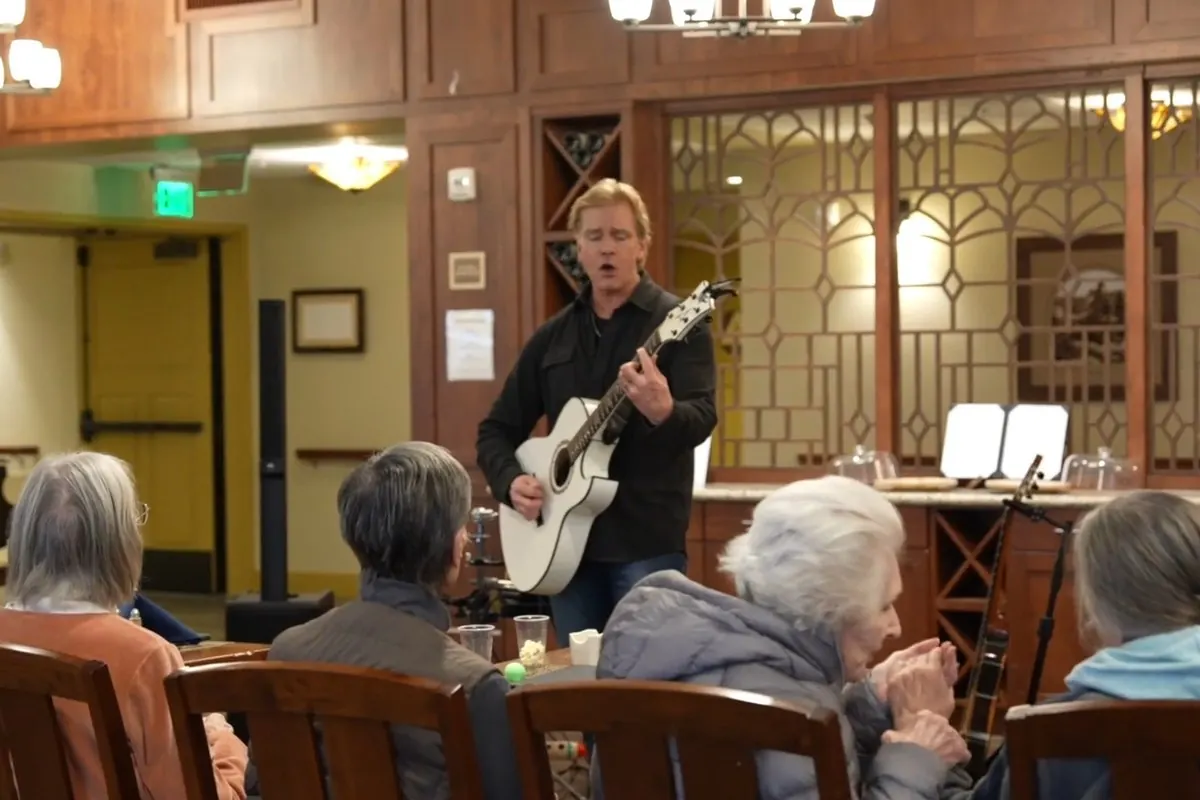
Updated September 30, 2026
Play live music for people with moderate to severe dementia and they may respond in ways a recording doesn’t draw out. In a small randomized trial of 32 people with moderate to severe dementia and apathy, 69% engaged positively with live interactive music, against 25% with pre-recorded music (not a significant change) and 12.5% during silence (International Psychogeriatrics, Dec 2006).
That gap is why this page exists.
Every number below comes from the study, agency or survey that produced it, with the date it was published. I will try to refresh this page monthly. None of it claims that music cures anything. Each stat reports what one study measured, in the people it measured, and where a study was small or its evidence weak, I say so.
A word on where we stand. At Harmony & Healing, our professional musicians perform live music for groups of patients and residents in the common areas of hospitals, hospices and care facilities. We don’t provide clinical music therapy. Some of the research cited here tested sessions led by credentialed therapists, and I’ve marked those studies when they come up.
Key Takeaways
- In a 14-year study of 6,710 adults aged 50 and older in England, people who went to concerts, theatre, museums or galleries every few months or more had a 31% lower risk of dying during follow-up than those who never did. The study was observational, so it can’t prove cause (The BMJ, Dec 2019).
- A WHO Europe scoping review drew on more than 3,000 studies and found a major role for the arts in preventing ill health, promoting health, and managing and treating illness across the lifespan (World Health Organization Regional Office for Europe, Nov 2019).
- Across 98 U.S. nursing homes using the MUSIC & MEMORY personalized-music program, the share of residents with dementia who came off antipsychotic medication over six months rose from 17.6% to 20.1%, while comparison homes stayed flat (15.9% to 15.2%). No difference showed up for depressed mood (American Journal of Geriatric Psychiatry, Sep 2017).
- An estimated 7.4 million Americans age 65 and older are living with Alzheimer’s in 2026, about 1 in 9 people in that age group (Alzheimer’s Association, Edition 2026).
- For the first time, 53.1% of all Medicare decedents in 2024 were enrolled in hospice at the time of death (National Alliance for Care at Home, Edition 2025).
- Among 111 cancer inpatients in Italy, state anxiety fell 3.87 points after weekly 45 to 60 minute live concerts held on oncology units (European Journal of Cancer Care, Nov 2017).
- A Cochrane review of 26 trials (2,051 patients), all using pre-recorded music, found listening lowered preoperative anxiety by 5.72 points more than standard care, though most trials were at high risk of bias, and one large trial found it more effective than the sedative midazolam for anxiety (Cochrane Database of Systematic Reviews, Jun 2013).
- A Lancet meta-analysis of 73 randomized trials found music reduced postoperative pain, anxiety and pain-medication use and raised patient satisfaction. Length of hospital stay didn’t change (The Lancet, Oct 2015).
- In a randomized pilot trial of 90 hemodialysis patients in Spain, four weeks of live classical music during treatment lowered anxiety scores by 5.35 points and depression scores by 5.88 points on average, while controls got worse (PLoS One, Aug 2024).
- In a randomized trial of 60 stroke patients in Finland, those who listened daily to self-chosen music for two months recovered verbal memory and focused attention significantly more than audiobook or control groups (Brain, Mar 2008).
- In 2024, 33% of U.S. adults aged 50 to 80 felt lonely some of the time or often, about the same as in 2018 (34%) (University of Michigan National Poll on Healthy Aging, Dec 2024).
- Lacking social connection can raise the risk of premature death as much as smoking up to 15 cigarettes a day (U.S. Surgeon General, May 2023).
- Chronic loneliness and social isolation can raise older adults’ risk of developing dementia by approximately 50% (Office of the U.S. Surgeon General, May 2023).
- Giving to health organizations rose 6.1% to an estimated $61.43 billion in 2025 (Giving USA Foundation, Jun 2026).
Music, the arts and health: what the evidence base shows
The case for music in care settings doesn’t rest on anecdote anymore. What most people haven’t heard is how differently the same people respond when the music is played live in the room. Much of that evidence comes from small trials. We’ll say so each time.
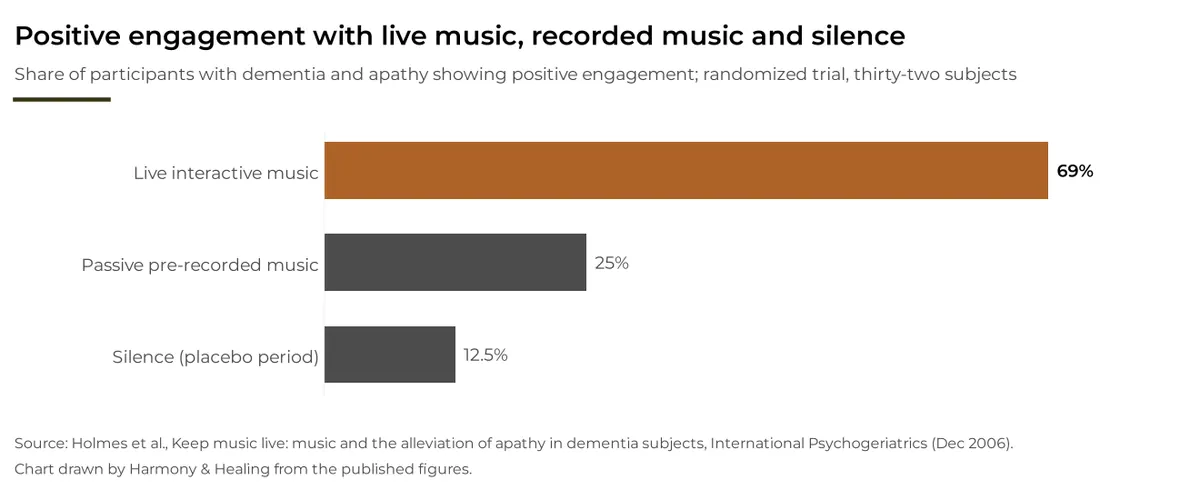
Figure 1: The live-music gap in one picture. In a randomized trial of 32 people with moderate to severe dementia and apathy, engagement with live interactive music ran nearly three times higher than with pre-recorded music. Source: International Psychogeriatrics, Holmes et al., Keep music live, Dec 2006. Chart drawn by Harmony & Healing from the published figures, 30 Sep 2026.
How much research links the arts to better health?
A lot, and it keeps growing. The WHO Europe review in the takeaways above sums up that body of work, and the English ageing study found the mortality link held after the researchers adjusted for money, health and social life. It didn’t vanish for occasional audiences either. People who went to receptive arts events only once or twice a year still had a 14% lower risk of dying than those who never went (The BMJ, Dec 2019).
That audience is large. Almost half of U.S. adults (47.9%) attended an in-person arts event in 2022, counting both live performances and public art places (National Endowment for the Arts, Aug 2025). For a closer look at how researchers got here, see our history of music in healthcare.
How does everyday music listening relate to well-being?
Listeners report feeling a little better. In AARP’s nationally representative survey of 3,185 U.S. adults, casual and focused music listeners had slightly higher average mental well-being scores and slightly lower anxiety and depression than adults overall (AARP Research, Jun 2020).
Music fills a lot of ordinary hours. Just over one-third of U.S. adults spend half the time or more listening to background music during everyday activities (AARP Research, Jun 2020). And most people have made it themselves. Three-quarters of U.S. adults say they’ve sung in a choir or on their own, including 83% of women and 71% of men (AARP Research, Jun 2020).
Newer work points at the social side. A 2026 systematic review of 13 studies found music listening consistently linked to better mood, better emotional regulation and lower anxiety in adults 60 and older, and suggested that listening in a group or community setting may add a benefit for loneliness (BMC Public Health, May 2026). We cover more of this in enhancing well-being through music.
Does live music reach people differently than recorded music?
In several studies, yes. The trial in the chart above is the sharpest result. It isn’t alone. A separate observational study of 24 people with moderate to severe dementia in the UK found live music significantly more effective than recorded music or no music at raising engagement and well-being, whatever their level of cognitive impairment (Aging & Mental Health, May 2004).
Cancer care shows a similar pattern. In a randomized trial of 143 lymphoma patients in Denmark, patient-preferred live music during chemotherapy produced a borderline significant 7% reduction in anxiety versus standard care, while pre-recorded music didn’t reach significance (Supportive Care in Cancer, Oct 2019). In a pilot of 46 day-surgery patients, live harp music lowered heart rate and diastolic blood pressure before surgery more than recorded harp music did, though fear fell equally in both groups (Alternative Therapies in Health and Medicine, May 2020). And in an exploratory trial of 33 ventilated children aged 0 to 2 in U.S. intensive care, therapist-led live music produced a heart-rate drop that held at 60 minutes (American Journal of Critical Care, Sep 2021).
The honest counterpoint matters too. A 2020 review of 15 group music studies in dementia found recorded-music programs gave more consistent behavioral and psychological results, while live music showed its benefit in communication and relationships (Arts & Health, Oct 2020). More on this in how music helps people heal.
Dementia and memory care statistics
Dementia is where music programs have been measured at the largest scale, in real nursing homes, with real medication and behavior records. Most of those big program studies used personal playlists on headphones, not live group music. Keep that in mind as you read.
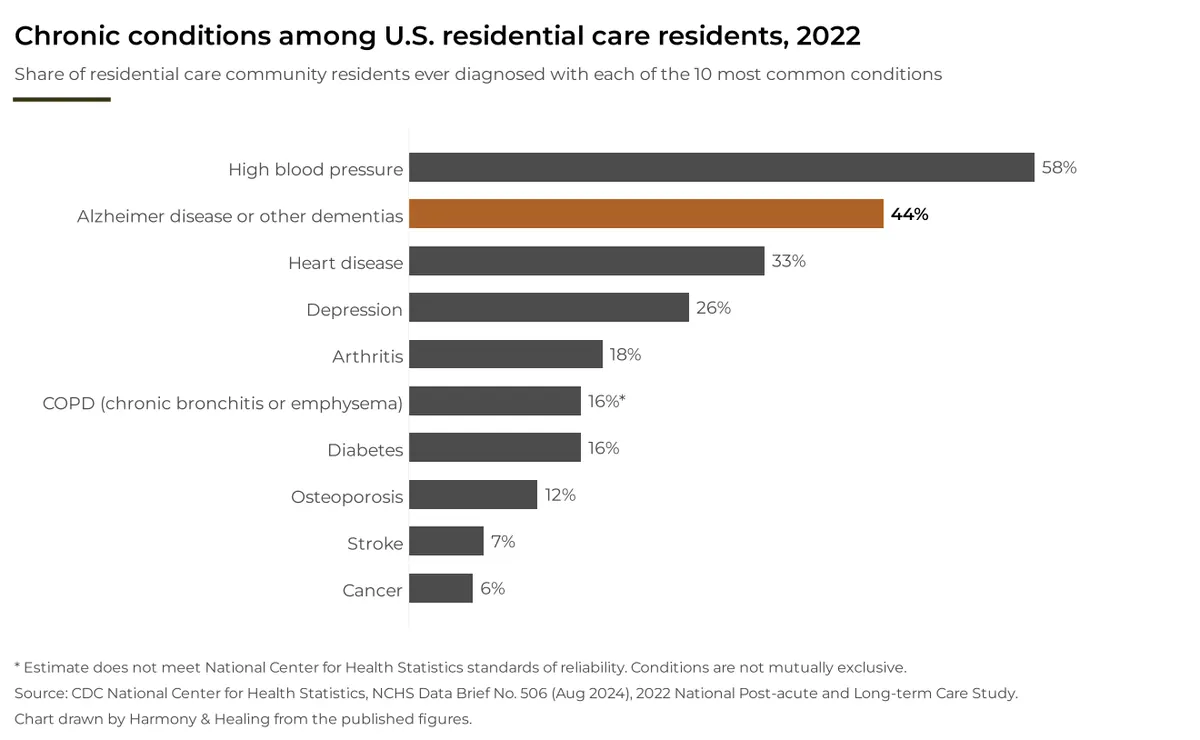
Figure 2: Dementia is the second most common diagnosis in U.S. assisted living and residential care, behind only high blood pressure, which means music programs there are serving a population where nearly half the residents live with memory loss. Source: CDC National Center for Health Statistics, NCHS Data Brief No. 506, Figure 4, Aug 2024 (2022 data). Chart drawn by Harmony & Healing from the published figures, 30 Sep 2026.
How many Americans live with dementia, and where do they live?
Millions, and many of them in care communities. Behind every diagnosis is usually a family. Nearly 13 million Americans provide unpaid care for someone with dementia, and in 2025 they gave more than 19 billion hours of care valued at more than $446 billion (Alzheimer’s Association, Edition 2026).
About 1,016,400 people lived in U.S. assisted living and other residential care communities on a given day in 2022 (CDC National Center for Health Statistics, Aug 2024). Alzheimer’s disease or another dementia was the second most common diagnosis among them at 44%, after high blood pressure at 58% (NCHS Data Brief No. 506, Aug 2024). That’s nearly half of all residents.
Nursing homes add a second, larger layer. The U.S. had 14,700 nursing homes with 1.6 million licensed beds and 1.2 million residents in 2022 (CDC FastStats, Feb 2026). Our guide to music for dementia patients covers what families can do at home.
What have music programs in memory care measured?
Fewer behavior problems, mostly. The 98-home MUSIC & MEMORY study in the takeaways also found the share of residents whose behavioral problems decreased rose from 50.9% to 56.5%, against 55.8% to 55.9% in comparison homes (American Journal of Geriatric Psychiatry, Sep 2017). In a pilot across 4 U.S. nursing homes, observed agitation scores for 45 residents with advanced dementia averaged 1.6 while they listened to their preferred music, against 4.4 when they weren’t listening (Journal of the American Geriatrics Society, Oct 2019).
The strongest summary is more cautious. A 2025 Cochrane review of 30 trials (1,720 people with dementia, mostly in group sessions, a mix of therapist-led and other music programs) found at least five sessions probably improve depressive symptoms slightly and may improve overall behavioral problems, but likely don’t improve agitation or aggression (Cochrane Database of Systematic Reviews, Mar 2025).
Earlier-stage dementia responds too. In a randomized trial of 89 people with mild to moderate dementia in Finland, 10 weeks of coached singing or listening improved mood, orientation and remote memory compared with usual care, and singing lifted caregiver well-being (The Gerontologist, Aug 2014). Researchers who attended 22 concerts in care facilities in England and Japan saw more cooperation and conversation among residents with mild to mid-stage dementia and less agitation among those with advanced dementia (Aging & Mental Health, May 2017).
How many care facilities offer music or activity programs?
Nobody counts them. We looked for a national survey of music programs in U.S. nursing homes or assisted living and couldn’t find one. What exists is a rule and two old hospice surveys.
The rule is clear. Every Medicare- and Medicaid-certified nursing home must run an ongoing activities program that includes facility-sponsored group activities (U.S. Code of Federal Regulations, 42 CFR 483.24(c), Sep 2026).
The hospice numbers are old. Read them as history. In 2007, 41.8% of U.S. hospice providers offered complementary therapies, and 62.2% of those offered what the survey called music therapy (CDC National Center for Health Statistics, Jan 2011). A random-sample survey of 591 hospices in 2008 and 2009 found 29% employed a therapist in art, massage or music, and 53% of those employed a music therapist (Journal of Pain and Symptom Management, Jun 2015).
If you run activities for a memory care or assisted living community, you can request a live group performance for your residents in your common area.
Hospice, cancer and serious illness statistics
More than half of Medicare decedents are now enrolled in hospice when they die. And some of the most striking cancer results come from something simple. Live concerts on hospital units. The strongest review in this section found consistent benefit only when credentialed therapists led the sessions, and we won’t pretend otherwise.
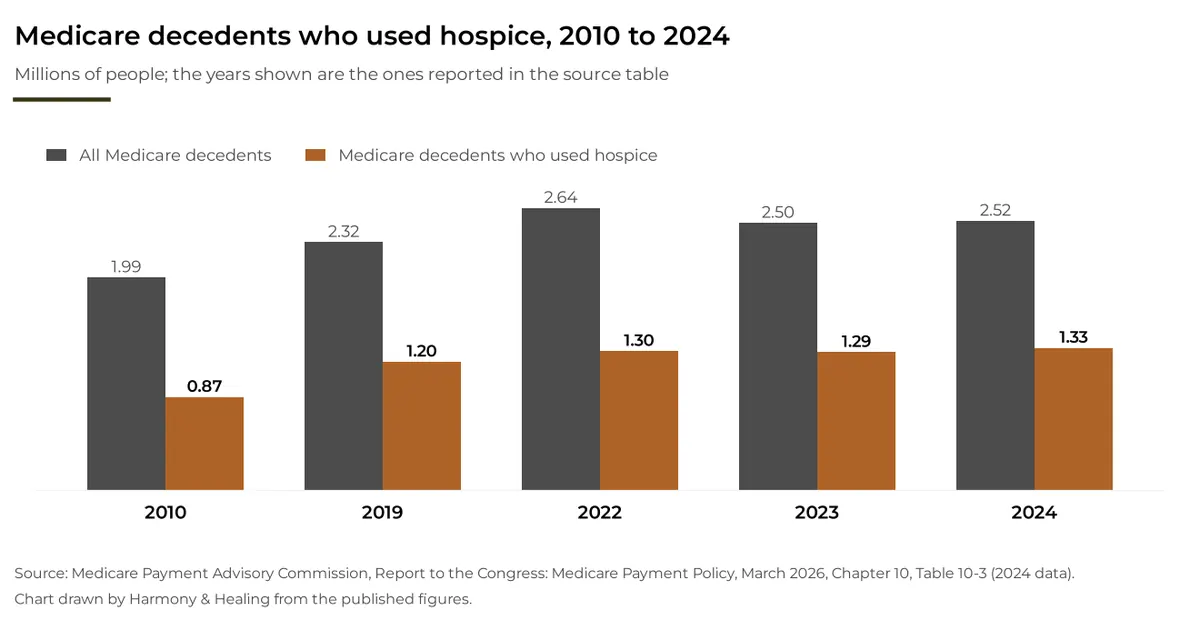
Figure 3: Hospice has become the normal way Americans on Medicare die, and it’s still growing: 1.33 million of 2.52 million Medicare decedents used hospice in 2024, up from 0.87 million in 2010. Source: Medicare Payment Advisory Commission, March 2026 Report to the Congress, Chapter 10, Table 10-3, Mar 2026 (2024 data). Chart drawn by Harmony & Healing from the published figures, 30 Sep 2026.
How many Americans receive hospice care?
More than 1.8 million a year. In 2024, more than 1.8 million Medicare beneficiaries, including more than half of Medicare decedents, received hospice care from about 6,700 providers (MedPAC, Mar 2026).
Dementia accounts for a big share. Neurovascular conditions, the group that includes dementia, were the principal diagnosis for 25.4% of Medicare hospice stays in 2024, second only to circulatory conditions at 29.8% (National Alliance for Care at Home, Edition 2025). We write more about this work in healing music for hospice.
What has music measured at the end of life?
Less pain, mostly, with caveats. A 2019 meta-analysis of 11 randomized trials (969 terminally ill patients) found therapist-led music sessions reduced pain and improved quality of life compared with general palliative care (Journal of Pain and Symptom Management, Feb 2019). A 2024 meta-analysis pooling music and hypnosis in palliative care found a significant drop in pain across randomized trials, with an effect size of -0.42 (BMJ Supportive & Palliative Care, Jan 2024).
The newest review is blunter. A September 2026 meta-analysis of 9 randomized trials (675 patients with advanced cancer in palliative care) found lower pain in a pooled analysis of 3 of those trials (224 patients), but called the overall evidence very uncertain (Journal of Clinical Medicine, Sep 2026).
Families notice something the scales miss. In records of 10,534 cancer patients at a large national hospice, families of those who received therapist-led music sessions were more likely to report discussions about spirituality (odds ratio 1.59), though pain, anxiety and overall satisfaction didn’t differ (Journal of Pain and Symptom Management, Aug 2015). We also play for families at George Mark Children’s House, a pediatric hospice.
What has music measured in cancer care?
Lower anxiety, fairly consistently. The scale is huge. About 2,114,850 new cancer diagnoses (5,800 a day) and 626,140 cancer deaths are projected in the U.S. in 2026 (American Cancer Society, Jan 2026).
A 2021 Cochrane review of 81 trials (5,576 participants), roughly half therapist-led and half recorded listening, found music interventions may produce a large reduction in anxiety in adults with cancer, an average of 7.73 points on the Spielberger scale, on very low-certainty evidence (Cochrane Database of Systematic Reviews, Oct 2021). Who delivered the music mattered. The same review found benefits held steady across studies when credentialed therapists delivered the sessions, while pre-recorded listening offered by medical staff gave inconsistent results (Cochrane Database of Systematic Reviews, Oct 2021). It also reported a moderate pain-reducing effect across 12 studies of 632 adults, again on very low-certainty evidence (Cochrane, Oct 2021).
Live concerts have their own record. Beyond the Italian anxiety result in the takeaways, a controlled study of 242 hospitalized cancer patients in Italy found those whose stay included a live concert left with less distress, lower anxiety and depression scores and higher well-being than those whose stay didn’t. Pain and fatigue didn’t differ (Palliative & Supportive Care, Dec 2018).
Hospice and oncology teams can request a live group performance for patients and families in a lounge, day room or other shared space.
Hospital, surgery and rehabilitation statistics
Surgery is the most-studied setting for music in medicine, and the results are fairly consistent. In one large trial, music did better than a sedative for anxiety. Children’s and stroke results point the same way on smaller evidence.
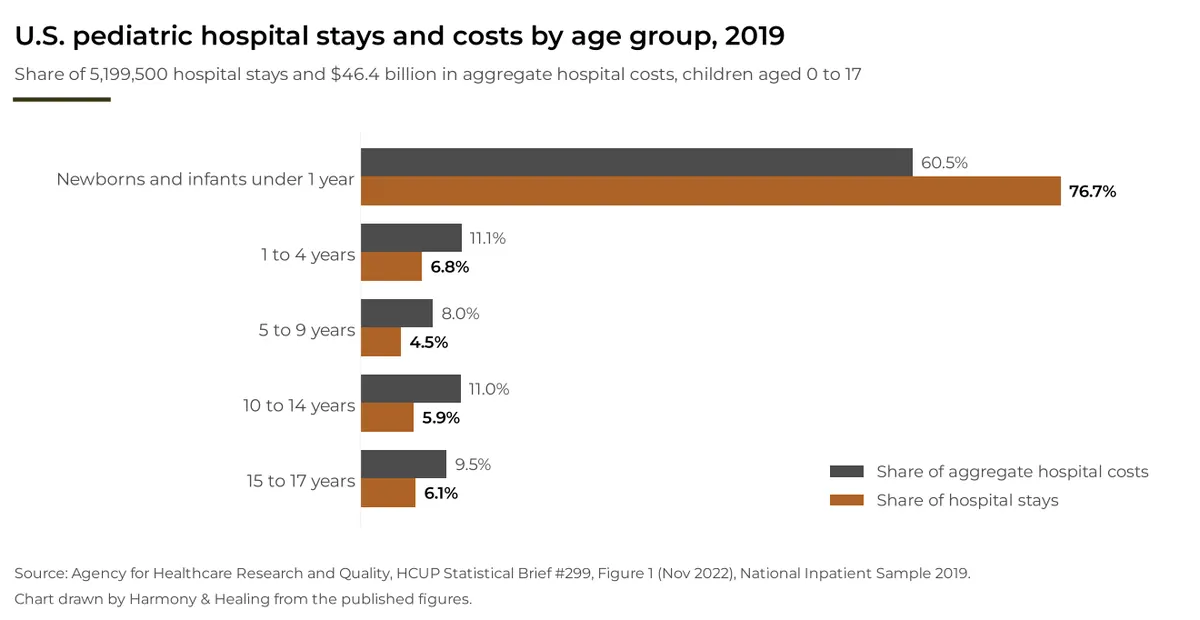
Figure 4: Most children in U.S. hospitals are babies: infants under 1 year made up 76.7% of 5.2 million pediatric stays in 2019, which is why so much of the children’s music research happens in neonatal and pediatric intensive care. Source: Agency for Healthcare Research and Quality, HCUP Statistical Brief #299, Figure 1, Nov 2022 (2019 data). Chart drawn by Harmony & Healing from the published figures, 30 Sep 2026.
What has music measured for surgical and hospital patients?
Less pain, less anxiety, trial after trial. The Lancet analysis in the takeaways also found music worked even when patients were under general anesthetic, and that the choice of music and its timing made little difference (The Lancet, Oct 2015). A 2018 meta-analysis of 92 randomized trials (7,385 surgical patients) put the effect at the equivalent of 21 mm less anxiety and 10 mm less pain on a 100 mm scale (British Journal of Surgery, Jun 2018).
Dialysis units have tested live performers directly. Alongside the Spanish trial in the takeaways, a Danish pilot trial found 30 minutes a week of live music by professional musicians during hemodialysis significantly reduced patients’ immediate fatigue and anxiety versus usual care (Journal of Renal Care, Mar 2024). Our piece on lessening surgical pain with music walks through the surgery research.
What has music measured for children in the hospital?
Less pain, with no reported harm. U.S. hospitals recorded 5.2 million pediatric hospitalizations in 2019, and 76.7% were newborns and infants under 1 (Agency for Healthcare Research and Quality, Nov 2022).
A 2022 meta-analysis of 38 randomized trials (5,601 newborns, infants and children) found music interventions significantly lowered pain and reduced heart rate and breathing rate (Journal of Clinical Medicine, Feb 2022). A 2026 meta-analysis of 12 randomized trials in hospitalized children found music cut anxiety, fear and pain with large effects. No included study reported an adverse effect (Journal of Pediatric Nursing, Jan 2026).
Around surgery, the heart slows. A 2026 meta-analysis of 17 randomized trials (1,871 children) found perioperative music lowered heart rate by about 12.9 beats per minute, on very low to low certainty evidence (Paediatric Anaesthesia, Sep 2026). A 2021 review of 11 studies (429 children in cancer treatment) found lower pain and anxiety and better quality of life than control conditions, with each result pooled from five studies (Complementary Therapies in Medicine, Jun 2021), though a Cochrane review the same year said there were too few pediatric trials to draw conclusions on pain or quality of life (Cochrane Database of Systematic Reviews, Oct 2021). We’ve played for families at Lucile Packard Children’s Hospital.
What has music measured after a stroke?
Better recovery of memory and attention in one well-known trial, though a later review didn’t find strong evidence for it. Stroke is common, and recovery is hard. More than 795,000 people in the U.S. have a stroke every year, about 610,000 of them first strokes (Centers for Disease Control and Prevention, Oct 2024). It’s a leading cause of serious long-term disability and reduces mobility in more than half of survivors age 65 and older (CDC Stroke Facts, Oct 2024).
The Finnish stroke trial in the takeaways also found less depressed and confused mood in the music group than in controls. Rhythm may help people walk again, too. A Cochrane review of 29 trials (775 people with acquired brain injury), mixing therapist-led and other music programs, found rhythm-based music may raise walking speed after stroke by about 11.34 meters per minute on moderate-quality evidence (Cochrane Database of Systematic Reviews, Jan 2017). The same review found no strong evidence for effects on memory and attention. See the healing power of music for brain injury patients.
Veterans, loneliness and older adults
Isolation is a health risk on the scale of smoking. The people we play for, veterans and older adults in care, carry more of it than most. The veterans’ music data is still early. It’s mostly pilots, labelled as such.
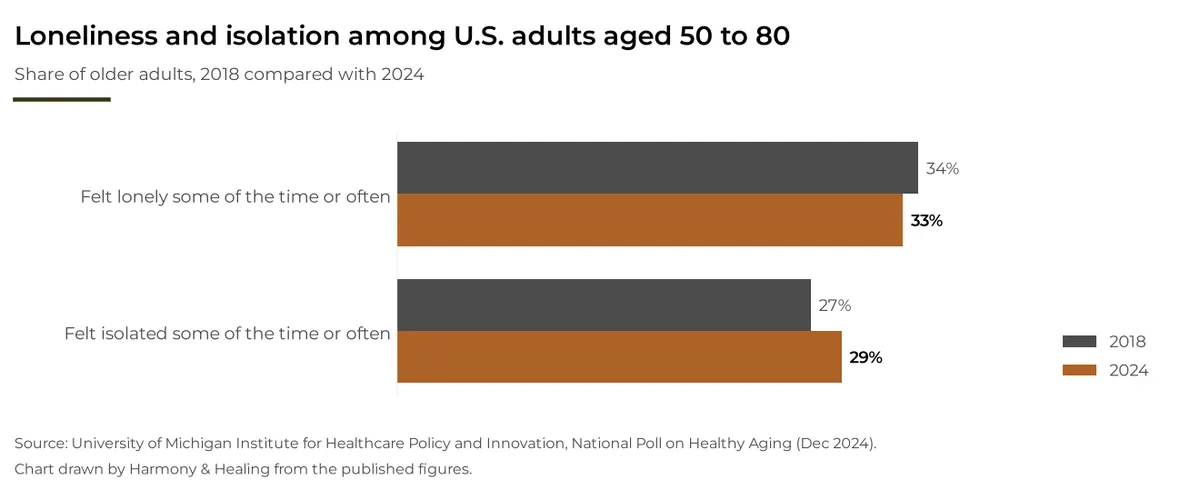
Figure 5: Loneliness among older Americans is back to where it was before the pandemic, and where it was before was already high: about one in three adults aged 50 to 80. Source: University of Michigan Institute for Healthcare Policy and Innovation, National Poll on Healthy Aging, Dec 2024. Chart drawn by Harmony & Healing from the published figures, 30 Sep 2026.
How common is PTSD among veterans, and what have music programs measured?
More common than in the general public, and far more common among recent veterans. About 7% of U.S. veterans will have PTSD at some point in life, versus 6% of all adults, and the rate is 13% for female veterans (U.S. Department of Veterans Affairs, National Center for PTSD, Sep 2026). Women veterans carry more of it. Among veterans of the Iraq and Afghanistan wars, 29% will have PTSD at some point, and 15% had it in the past year (VA National Center for PTSD, Sep 2026). Of the 5.8 million veterans the VA served in fiscal year 2024, about 14% of men and 24% of women were diagnosed with PTSD (National Center for PTSD, Sep 2026).
The music trials are small but hopeful. In a randomized pilot of an active music-instruction program for veterans with moderate to severe PTSD, average severity fell 14.3% and depressive symptoms 20.4% (BMC Psychology, Dec 2018). When 10 veterans with PTSD co-wrote an original song with a professional songwriter, 95% said they’d refer others, and symptoms fell with an effect size of 0.869 (Journal of Alternative and Complementary Medicine, Mar 2020). We began virtual visits with veterans at the Martinez VA Hospital in 2023.
How widespread is loneliness among older adults?
Widespread, and stubborn. About one in four community-dwelling Americans aged 65 and older are considered socially isolated (National Academies of Sciences, Engineering, and Medicine, Report 2020). That count leaves out people already living in care facilities, where no national survey measures it.
Isolation hasn’t eased since the pandemic. 29% of adults aged 50 to 80 felt isolated some of the time or often in 2024, just above the 27% seen in 2018 (University of Michigan IHPI, Dec 2024). Across all ages, about one in two U.S. adults reported loneliness in recent years, even before the pandemic (U.S. Department of Health and Human Services, May 2023).
What does social isolation cost in health terms?
Years of life. And a heavier load on the heart. The Surgeon General’s advisory, the source of the smoking comparison and the dementia-risk figure above, also reports that poor social relationships were tied to a 29% higher risk of heart disease and a 32% higher risk of stroke across 16 longitudinal studies (Surgeon General’s Advisory on Social Connection, May 2023).
Loneliness isn’t something a pill fixes. Researchers think listening together may help, which is one reason we play for rooms full of residents instead of one person at a time. Read how music reduces stress for more.
Hospitals, hospices, rehab centers and memory care communities never pay for a visit, and patients and families never pay anything. Donors cover it. If isolation in care facilities worries you, a gift to Harmony & Healing helps fund our group visits.
Giving to health and the arts
Health and the arts both hit record giving in 2025, even as the number of donors keeps shrinking. That makes each donor count for more.
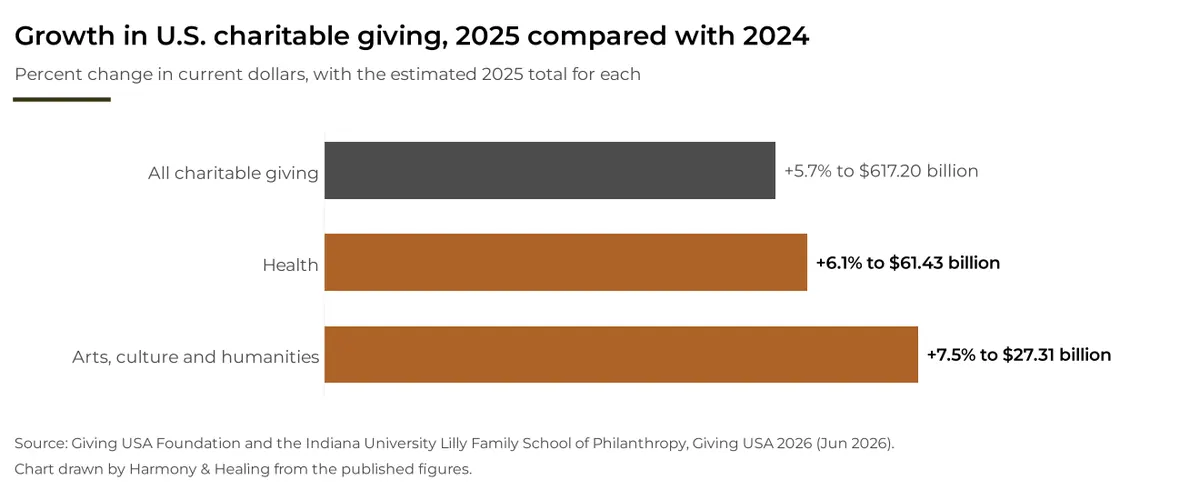
Figure 6: Americans gave more to health and to the arts in 2025, and both grew faster than giving overall, a sign that donors still back causes where they can see the result. Source: Giving USA Foundation and the Indiana University Lilly Family School of Philanthropy, Giving USA 2026, Jun 2026 (2025 data). Chart drawn by Harmony & Healing from the published figures, 30 Sep 2026.
How much do Americans give to health and arts causes?
More than ever. Americans gave a record estimated $617.20 billion to charity in 2025, up 5.7% (3.0% after inflation) and the first year above $600 billion (Giving USA 2026, Jun 2026). Giving to arts, culture and humanities rose 7.5% to an estimated $27.31 billion (Giving USA, Jun 2026).
Individuals still carry it. They gave an estimated $394.2 billion in 2025, and bequest giving rose 19.7% to $62.19 billion, the largest increase of any source (Indiana University Lilly Family School of Philanthropy, Jun 2026). If a gift in your will interests you, see how to leave a legacy of healing.
How are donor numbers changing?
Falling, but more slowly. U.S. donor counts fell an estimated 0.8% year over year in Q1 2026, an improvement on the 2.3% decline a year earlier (Fundraising Effectiveness Project, Jul 2026). Dollars raised rose an estimated 4.3% in Q1 2026, slowing from 5.4% growth a year earlier (AFP Foundation for Philanthropy and GivingTuesday, Jul 2026).
Tribute gifts are common. In a self-selected survey of 641 online donors, 46% had given a tribute gift in the past 12 months, and memorial gifts were the most common kind at 43% (Nonprofit Tech for Good, Feb 2025).
You can give in honor or memory of someone you love and fund a live group performance for patients who need one. The memorial donation guide explains how.
Glossary
- RCT: Randomized controlled trial. Participants are assigned by chance to the music group or a comparison group.
- Systematic review / meta-analysis: A review that gathers every eligible study on a question. A meta-analysis pools their numbers into one estimate.
- Cochrane review: A systematic review produced to the Cochrane Collaboration’s standards, widely treated as the reference summary of an evidence base.
- SMD (effect size): Standardized mean difference, which lets studies using different scales be pooled. Around 0.2 is small, 0.5 moderate, 0.8 large.
- Certainty of evidence (GRADE): How confident reviewers are that an estimate is close to the truth: high, moderate, low or very low.
- Spielberger scale (STAI): The State-Trait Anxiety Inventory, a standard anxiety questionnaire scored 20 to 80.
- Music medicine: Cochrane’s term for listening to pre-recorded music offered by medical staff.
- Music therapy (as labelled in studies): Sessions delivered by a credentialed music therapist. We define it here only so you can read the studies. Harmony & Healing doesn’t provide it.
- Residential care community: Assisted living and similar settings that provide housing and help with daily activities but not skilled nursing care.
- Hospice: Care focused on comfort for people with a terminal illness, usually with a life expectancy of six months or less.
- PTSD: Post-traumatic stress disorder.
Methodology and Sources
Every statistic on this page was traced to the organization that produced it: a peer-reviewed journal, a federal agency, a national survey or the research group that ran the study. We don’t cite roundups or other statistics pages. Each figure was checked against the source’s own text before it went in, and each is dated with its publication. Studies from outside the U.S. name their country. Where a study tested sessions led by credentialed therapists rather than live performance, we say so. We plan to review the page monthly and replace figures as newer editions of these reports come out.
Sources
- World Health Organization Regional Office for Europe. What is the evidence on the role of the arts in improving health and well-being? A scoping review. https://www.who.int/europe/publications/i/item/9789289054553
- The BMJ. The art of life and death: 14 year follow-up analyses of associations between arts engagement and mortality in the English Longitudinal Study of Ageing. https://pubmed.ncbi.nlm.nih.gov/31852659/
- National Endowment for the Arts. By All Means, the Arts: A Full Report of the 2022 Survey of Public Participation in the Arts. https://www.arts.gov/sites/default/files/SPPA_Comprehensive_Report_FINAL.pdf
- AARP Research. 2020 AARP Music and Brain Health Survey. https://www.aarp.org/pri/topics/health/brain-health/brain-health-and-music.html
- BMC Public Health. The impact of music listening on well-being in older adults: a systematic review. https://pubmed.ncbi.nlm.nih.gov/42215978/
- International Psychogeriatrics. Keep music live: music and the alleviation of apathy in dementia subjects. https://pubmed.ncbi.nlm.nih.gov/16805928/
- Aging & Mental Health. Emotional and behavioural responses to music in people with dementia: an observational study. https://pubmed.ncbi.nlm.nih.gov/15203404/
- Supportive Care in Cancer. Effects of live music during chemotherapy in lymphoma patients: a randomized, controlled, multi-center trial. https://pubmed.ncbi.nlm.nih.gov/30762141/
- Arts & Health. Live and recorded group music interventions with active participation for people with dementias: a systematic review. https://pubmed.ncbi.nlm.nih.gov/31583964/
- Alternative Therapies in Health and Medicine. Efficacy of Live Versus Recorded Harp Music in Reducing Preoperative Stress and Fear Related to Minor Surgery: A Pilot Study. https://pubmed.ncbi.nlm.nih.gov/32088668/
- American Journal of Critical Care. Effect of Live Versus Recorded Music on Children Receiving Mechanical Ventilation and Sedation. https://pubmed.ncbi.nlm.nih.gov/34467386/
- Alzheimer’s Association. 2026 Alzheimer’s Disease Facts and Figures. https://www.alz.org/alzheimers-dementia/facts-figures
- CDC National Center for Health Statistics. Residential Care Community Resident Characteristics: United States, 2022 (NCHS Data Brief No. 506). https://www.cdc.gov/nchs/data/databriefs/db506.pdf
- CDC National Center for Health Statistics. FastStats: Nursing Home Care. https://www.cdc.gov/nchs/fastats/nursing-home-care.htm
- American Journal of Geriatric Psychiatry. Individualized Music Program is Associated with Improved Outcomes for U.S. Nursing Home Residents with Dementia. https://pubmed.ncbi.nlm.nih.gov/28483436/
- Journal of the American Geriatrics Society. Measuring Effects of Nondrug Interventions on Behaviors: Music & Memory Pilot Study. https://pubmed.ncbi.nlm.nih.gov/31301191/
- Cochrane Database of Systematic Reviews. Music-based therapeutic interventions for people with dementia. https://pubmed.ncbi.nlm.nih.gov/40049590/
- The Gerontologist. Cognitive, emotional, and social benefits of regular musical activities in early dementia: randomized controlled study. https://pubmed.ncbi.nlm.nih.gov/24009169/
- Aging & Mental Health. Exploring the impact of music concerts in promoting well-being in dementia care. https://pubmed.ncbi.nlm.nih.gov/26666405/
- U.S. Code of Federal Regulations. 42 CFR 483.24, Quality of life. https://www.ecfr.gov/current/title-42/chapter-IV/subchapter-G/part-483/subpart-B/section-483.24
- CDC National Center for Health Statistics. Complementary and alternative therapies in hospice: The National Home and Hospice Care Survey: United States, 2007. https://stacks.cdc.gov/view/cdc/13195
- Journal of Pain and Symptom Management. Massage, Music, and Art Therapy in Hospice: Results of a National Survey. https://pubmed.ncbi.nlm.nih.gov/25555445/
- Medicare Payment Advisory Commission. March 2026 Report to the Congress: Medicare Payment Policy, Chapter 10: Hospice services. https://www.medpac.gov/wp-content/uploads/2026/03/Mar26_Ch10_MedPAC_Report_To_Congress_SEC.pdf
- National Alliance for Care at Home. Facts and Figures: Hospice Care in America, 2025 Edition, Executive Summary. https://allianceforcareathome.org/wp-content/uploads/Facts-and-Figures-2025-Executive-Summary.pdf
- Journal of Pain and Symptom Management. The Effectiveness of Music Therapy for Terminally Ill Patients: A Meta-Analysis and Systematic Review. https://pubmed.ncbi.nlm.nih.gov/30389608/
- BMJ Supportive & Palliative Care. Hypnosis and music interventions for anxiety, pain, sleep and well-being in palliative care: systematic review and meta-analysis. https://pubmed.ncbi.nlm.nih.gov/35292511/
- Journal of Clinical Medicine. Music-Based Interventions in Advanced Cancer Palliative Care: A Systematic Review and Meta-Analysis of Randomized Controlled Trials. https://pubmed.ncbi.nlm.nih.gov/42795831/
- Journal of Pain and Symptom Management. Music Therapy Is Associated With Family Perception of More Spiritual Support and Decreased Breathing Problems in Cancer Patients Receiving Hospice Care. https://pubmed.ncbi.nlm.nih.gov/25839735/
- American Cancer Society. Cancer Statistics, 2026. https://pressroom.cancer.org/cancer-statistics-report-2026
- Cochrane Database of Systematic Reviews. Music interventions for improving psychological and physical outcomes in people with cancer. https://pubmed.ncbi.nlm.nih.gov/34637527/
- European Journal of Cancer Care. Live concerts reduce cancer inpatients’ anxiety. https://pubmed.ncbi.nlm.nih.gov/27726208/
- Palliative & Supportive Care. Live music intervention for cancer inpatients: The Music Givers format. https://pubmed.ncbi.nlm.nih.gov/28347381/
- The Lancet. Music as an aid for postoperative recovery in adults: a systematic review and meta-analysis. https://pubmed.ncbi.nlm.nih.gov/26277246/
- British Journal of Surgery. Meta-analysis evaluating music interventions for anxiety and pain in surgery. https://pubmed.ncbi.nlm.nih.gov/29665028/
- Cochrane Database of Systematic Reviews. Music interventions for preoperative anxiety. https://pubmed.ncbi.nlm.nih.gov/23740695/
- PLoS One. The effectiveness of live music in reducing anxiety and depression among patients undergoing haemodialysis. https://pubmed.ncbi.nlm.nih.gov/39186740/
- Journal of Renal Care. Live music during haemodialysis: A multiple methods randomised controlled pilot study. https://pubmed.ncbi.nlm.nih.gov/36463498/
- Agency for Healthcare Research and Quality, HCUP. Overview of Hospital Stays Among Children and Adolescents, 2019 (Statistical Brief #299). https://hcup-us.ahrq.gov/reports/statbriefs/sb299-Hospital-Stays-Children-2019.jsp
- Journal of Clinical Medicine. Music Intervention for Pain Control in the Pediatric Population: A Systematic Review and Meta-Analysis. https://pubmed.ncbi.nlm.nih.gov/35207263/
- Journal of Pediatric Nursing. The effect of music interventions on anxiety, fear, and pain in hospitalized children: A systematic review and meta-analysis. https://pubmed.ncbi.nlm.nih.gov/41240791/
- Paediatric Anaesthesia. Effects of Perioperative Music Interventions on Emotional Outcomes in Children and Adolescents: A Systematic Review and Meta-Analysis. https://pubmed.ncbi.nlm.nih.gov/42287097/
- Complementary Therapies in Medicine. Music interventions in pediatric oncology: Systematic review and meta-analysis. https://pubmed.ncbi.nlm.nih.gov/33964406/
- Centers for Disease Control and Prevention. Stroke Facts. https://www.cdc.gov/stroke/data-research/facts-stats/index.html
- Brain. Music listening enhances cognitive recovery and mood after middle cerebral artery stroke. https://pubmed.ncbi.nlm.nih.gov/18287122/
- Cochrane Database of Systematic Reviews. Music interventions for acquired brain injury. https://pubmed.ncbi.nlm.nih.gov/28103638/
- U.S. Department of Veterans Affairs, National Center for PTSD. How Common is PTSD in Veterans? https://www.ptsd.va.gov/understand/common/common_veterans.asp
- BMC Psychology. Music-instruction intervention for treatment of post-traumatic stress disorder: a randomized pilot study. https://pubmed.ncbi.nlm.nih.gov/30567598/
- Journal of Alternative and Complementary Medicine. Collaborative Songwriting Intervention for Veterans with Post-Traumatic Stress Disorder. https://pubmed.ncbi.nlm.nih.gov/31985263/
- National Academies of Sciences, Engineering, and Medicine. Social Isolation and Loneliness in Older Adults: Opportunities for the Health Care System. https://www.nationalacademies.org/projects/HMD-HSP-17-25/publication/25663
- University of Michigan Institute for Healthcare Policy and Innovation, National Poll on Healthy Aging. Loneliness and isolation: Back to pre-pandemic levels, but still high, for older adults. https://ihpi.umich.edu/news-events/news/loneliness-and-isolation-back-pre-pandemic-levels-still-high-older-adults
- U.S. Surgeon General, Department of Health and Human Services. Our Epidemic of Loneliness and Isolation. https://www.hhs.gov/sites/default/files/surgeon-general-social-connection-advisory.pdf
- Giving USA Foundation, researched by the Indiana University Lilly Family School of Philanthropy. Giving USA 2026: The Annual Report on Philanthropy for the Year 2025. https://givingusa.org/giving-usa-charitable-giving-rose-to-617-20-billion-in-2025-surpassing-the-600-billion-mark-for-the-first-time/
- Fundraising Effectiveness Project (AFP Foundation for Philanthropy and GivingTuesday). Fundraising Effectiveness Project Reports Easing Donor Losses in Q1 2026. https://afpglobal.org/news/fundraising-effectiveness-project-reports-easing-donor-losses-q1-2026-new-data-shows-growth
- Nonprofit Tech for Good. The Communication & Giving Preferences of 641 Online Donors. https://www.nptechforgood.com/2025/02/15/the-communication-giving-preferences-of-641-online-donors/
Table of Contents
- Key Takeaways
- Music, the arts and health: what the evidence base shows
- Dementia and memory care statistics
- Hospice, cancer and serious illness statistics
- Hospital, surgery and rehabilitation statistics
- Veterans, loneliness and older adults
- Giving to health and the arts
- Glossary
- Methodology and Sources
- Sources
- Get Regular Musical Visits for Your Facility Today!
- Donate now & make an impact!
Get Regular Musical Visits for Your Facility Today!
Request Monthly VisitsDonate now & make an impact!
Help us bring soothing live music to hospital patients, families & loved ones.
Donate